Something you can always find in every marijuana smoker’s pocket is weed grinder.It is necessity for every modern day smoker.There are many types of herb grinders used to crush weed and prepare it for smoking.Weed grinders can be in different sizes, colors and made for different purposes but they all have the same goal, to prepare weed for smoking.Various companies create a grinders from all kind of materials.The best herb grinders you can find on the market are aluminium grinders.Getting weed grinder requiers some research and understanding of brands and materials.
Crushing your weed is a simple task if you have a high quality herb grinder.Herb grinders save a lot of time you would eventually spend by slicing parts of bud with scissors, with grinder all you need to do is put the buds in it and make few spins.
In the past, when weed grinder wasn’t so popular people used to crush buds with a blender. This stoneage technique is replaced by herb grinders.
Weed grinders can be wooden, metal or plastic, it is considered that metal ones are the best because they seem to be easier to clean.
Sometimes buds can be pretty hard or sticky and it can be hard to crush weed for rolling. No matter if it is stickiest of green a weed grinder always transforms them into perfect form for rolling joints.
Using a grinder will save you lots of time and it makes the weed burn slowly so you can have nice long lasting hits.
Most grinders, especially the four piece metal ones collect the pollen crystals also known as kief, that fall off the buds when grinding.All you have to do is put buds into weed grinder and turn the grinder few times. As the buds break, they fall into a part of grinder with a screen and any loose material fall through the screen into place where pollen is collected.
The material you want to grind needs to be dry enough, wet marijuana is hard to grind and you will end up with your grinder stuck after usage.Herb grinders made smoking marijuana much easier, and it became a must have in weed smoking community.If you looking to buy quality herb grinder remember that the low price is not always the best option, instead you should be looking for the best price to quality ratio.
I like to write articles wich can help people to find usefull content.If you are looking to buy a quality Weed Grinder please visit www.cheapbongs.net for further informations.
In HIGH COUNTRY, Motherboard heads to Denver–ground zero for cannabis legalization, and home to a booming tech sector in what could be called the Silicon Va… Video Rating: 4 / 5
Cannabis Career Institute comes to South Florida to promote jobs and business opportunities in the growing cannabis industry The first CCI seminar in Florida has forced CCI organizers to expand the classroom facility as Floridians embrace the landmark…
According to history books, during the late years of 1970’s, cannabis patient named Mr. Robert Randall sued the federal government for arresting him for using medicinal cannabis to treat his glaucoma. He won the case and with this, the presiding judge ruled that Randall should use cannabis for health purposes and required the Food and Drug Administration (FDA) to set up a program to allow cultivating, growing, purchasing and even selling cannabis.
The judge asked the FDA to allow growing this cannabis on a farm at the University of Mississippi and to distribute 300 cannabis cigarettes a month to Randall. Meanwhile, after several years, in 1992 to be exact, US President George H. W. Bush put an end to the program after the patient, Mr. Randall tried to make AIDS patients qualified for the said program as well.
Initially, there are thirteen people were already enrolled and were allowed to continue sniffing medical cannabis cigarettes to cure their medical conditions, then few years later, the US government just shipped medical cannabis cigarettes to merely seven medicinal cannabis patients. One cannabis patient named, Mr. Irvin Rosenfeld, who during those years has received medical cannabis attention from the program since 1982 to treat his rare bone tumors, urged the George W. Bush administration to reopen the program; however, in the end he was not successful though.
During those times, the state of Alaska is the only state in the United States where possession of up to one ounce is legal. Sacramento back then was not allowed to use this medical cannabis even as an alternative medicine to cure diseases.
Medical experts in Sacramento cited the dangers of cannabis even for medical purposes. They added that the lack of clinical research supporting its medicinal value to heal various medical conditions. Meanwhile, the American Society of Addiction Medicine (SAM) in March 2011 issued a white paper recommending a halt to using marijuana as a medicine in US states where it has been declared legal. But medical patients in the Sacramento region, who has been cured by this medical cannabis, beg to disagree about the proposal done by the (SAM). Medical cannabis patients defend the benefits they get through this medical cannabis, and they would rally behind the full legalization of this alternative medicine to cure their health problems.
During Governor Arnold Schwarzenegger’s reign as the Governor of California, medical cannabis has given so much attention. He prioritized the legalization of this alternative medicine to help medical patients who are looking for alternative treatment to cure their medical conditions.
Updated JAN 28, 2014 3:47p ET As the Super Bowl draws nearer, the anticipation for the matchup of the league’s top offense vs. the league’s top defense grows. But growing nearly as quickly in New York? The shadow marijuana is casting over the big game…
By: Jill Richardson, OtherWords.orgJan. 8, 2014 – Take a moment and look around you. Look up. The sky hasn’t fallen, has it? People in Colorado are buying marijuana — legally — and civilization hasn’t come crashing to its knees. At this point, we…
Marijuana legalization in Colorado and Washington has led some to dub this weekend the “Stoner Bowl,” and hometown fans planning to blaze through the big game can now show their team pride with their choice of weed. In the pot-happy cities of Seattle…
Organizers in Florida have collected enough signatures to put a measure on legalizing medical marijuana to a vote, activists announced on Monday. Advocates seeking to legalize pot for medicinal purposes in Florida said they exceeded the 683,149 signatures…
Moorestown Patch columnist Marsia Mason opines that America’s attitude toward Mary Jane might be a little backwards. Embarrassing as it is to admit, the rest of the world has moved on but my Internet server is still AOL. When practically everyone else…
Introduction:
Cannabis is not only the most abused illicit drug in the United States (Gold, Frost-Pineda, & Jacobs, 2004; NIDA, 2010) it is in fact the most abused illegal drug worldwide (UNODC, 2010). In the United States it is a schedule-I substance which means that it is legally considered as having no medical use and it is highly addictive (US DEA, 2010). Doweiko (2009) explains that not all cannabis has abuse potential. He therefore suggests using the common terminology marijuana when referring to cannabis with abuse potential. For the sake of clarity this terminology is used in this paper as well.
Today, marijuana is at the forefront of international controversy debating the appropriateness of its widespread illegal status. In many Union states it has become legalized for medical purposes. This trend is known as “medical marijuana” and is strongly applauded by advocates while simultaneously loathed harshly by opponents (Dubner, 2007; Nakay, 2007; Van Tuyl, 2007). It is in this context that it was decided to choose the topic of the physical and pharmacological effects of marijuana for the basis of this research article.
What is marijuana?
Marijuana is a plant more correctly called cannabis sativa. As mentioned, some cannabis sativa plants do not have abuse potential and are called hemp. Hemp is used widely for various fiber products including newspaper and artist’s canvas. Cannabis sativa with abuse potential is what we call marijuana (Doweiko, 2009). It is interesting to note that although widely studies for many years, there is a lot that researchers still do not know about marijuana. Neuroscientists and biologists know what the effects of marijuana are but they still do not fully understand why (Hazelden, 2005).
Deweiko (2009), Gold, Frost-Pineda, & Jacobs (2004) point out that of approximately four hundred known chemicals found in the cannabis plants, researchers know of over sixty that are thought to have psychoactive effects on the human brain. The most well known and potent of these is âÂÂ-9-tetrahydrocannabinol, or THC. Like Hazelden (2005), Deweiko states that while we know many of the neurophysical effects of THC, the reasons THC produces these effects are unclear.
Neurobiology:
As a psychoactive substance, THC directly affects the central nervous system (CNS). It affects a massive range of neurotransmitters and catalyzes other biochemical and enzymatic activity as well. The CNS is stimulated when the THC activates specific neuroreceptors in the brain causing the various physical and emotional reactions that will be expounded on more specifically further on. The only substances that can activate neurotransmitters are substances that mimic chemicals that the brain produces naturally. The fact that THC stimulates brain function teaches scientists that the brain has natural cannabinoid receptors. It is still unclear why humans have natural cannabinoid receptors and how they work (Hazelden, 2005; Martin, 2004). What we do know is that marijuana will stimulate cannabinoid receptors up to twenty times more actively than any of the body’s natural neurotransmitters ever could (Doweiko, 2009).
Perhaps the biggest mystery of all is the relationship between THC and the neurotransmitter serotonin. Serotonin receptors are among the most stimulated by all psychoactive drugs, but most specifically alcohol and nicotine. Independent of marijuana’s relationship with the chemical, serotonin is already a little understood neurochemical and its supposed neuroscientific roles of functioning and purpose are still mostly hypothetical (Schuckit & Tapert, 2004). What neuroscientists have found definitively is that marijuana smokers have very high levels of serotonin activity (Hazelden, 2005). I would hypothesize that it may be this relationship between THC and serotonin that explains the “marijuana maintenance program” of achieving abstinence from alcohol and allows marijuana smokers to avoid painful withdrawal symptoms and avoid cravings from alcohol. The efficacy of “marijuana maintenance” for aiding alcohol abstinence is not scientific but is a phenomenon I have personally witnessed with numerous clients.
Interestingly, marijuana mimics so many neurological reactions of other drugs that it is extremely difficult to classify in a specific class. Researchers will place it in any of these categories: psychedelic; hallucinogen; or serotonin inhibitor. It has properties that mimic similar chemical responses as opioids. Other chemical responses mimic stimulants (Ashton, 2001; Gold, Frost-Pineda, & Jacobs, 2004). Hazelden (2005) classifies marijuana in its own special class – cannabinoids. The reason for this confusion is the complexity of the numerous psychoactive properties found within marijuana, both known and unknown. One recent client I saw could not recover from the visual distortions he suffered as a result of pervasive psychedelic use as long as he was still smoking marijuana. This seemed to be as a result of the psychedelic properties found within active cannabis (Ashton, 2001). Although not strong enough to produce these visual distortions on its own, marijuana was strong enough to prevent the brain from healing and recovering.
Emotions:
Cannibinoid receptors are located throughout the brain thus affecting a wide variety of functioning. The most important on the emotional level is the stimulation of the brain’s nucleus accumbens perverting the brain’s natural reward centers. Another is that of the amygdala which controls one’s emotions and fears (Adolphs, Trane, Damasio, & Damaslio, 1995; Van Tuyl, 2007).
I have observed that the heavy marijuana smokers who I work with personally seem to share a commonality of using the drug to manage their anger. This observation has evidenced based consequences and is the basis of much scientific research. Research has in fact found that the relationship between marijuana and managing anger is clinically significant (Eftekhari, Turner, & Larimer, 2004). Anger is a defense mechanism used to guard against emotional consequences of adversity fueled by fear (Cramer, 1998). As stated, fear is a primary function controlled by the amygdala which is heavily stimulated by marijuana use (Adolphs, Trane, Damasio, & Damaslio, 1995; Van Tuyl, 2007).
Neurophysical Effects of THC:
Neurological messages between transmitters and receptors not only control emotions and psychological functioning. It is also how the body controls both volitional and nonvolitional functioning. The cerebellum and the basal ganglia control all bodily movement and coordination. These are two of the most abundantly stimulated areas of the brain that are triggered by marijuana. This explains marijuana’s physiological effect causing altered blood pressure (Van Tuyl, 2007), and a weakening of the muscles (Doweiko, 2009). THC ultimately affects all neuromotor activity to some degree (Gold, Frost-Pineda, & Jacobs, 2004).
An interesting phenomena I have witnessed in almost all clients who identify marijuana as their drug of choice is the use of marijuana smoking before eating. This is explained by effects of marijuana on the “CB-1” receptor. The CB-1 receptors in the brain are found heavily in the limbic system, or the nucleolus accumbens, which controls the reward pathways (Martin, 2004). These reward pathways are what affect the appetite and eating habits as part of the body’s natural survival instinct, causing us to crave eating food and rewarding us with dopamine when we finally do (Hazeldon, 2005). Martin (2004) makes this connection, pointing out that unique to marijuana users is the stimulation of the CB-1 receptor directly triggering the appetite.
What is high grade and low grade?
A current client of mine explains how he originally smoked up to fifteen joints of “low grade” marijuana daily but eventually switched to “high grade” when the low grade was starting to prove ineffective. In the end, fifteen joints of high grade marijuana were becoming ineffective for him as well. He often failed to get his “high” from that either. This entire process occurred within five years of the client’s first ever experience with marijuana. What is high and low grade marijuana, and why would marijuana begin to lose its effects after a while?
The potency of marijuana is measured by the THC content within. As the market on the street becomes more competitive, the potency on the street becomes more pure. This has caused a trend in ever rising potency that responds to demand. One average joint of marijuana smoked today has the equivalent THC potency as ten average joints of marijuana smoked during the 1960’s (Hazelden, 2005).
THC levels will depend mainly on what part of the cannabis leaf is being used for production. For instance cannabis buds can be between two to nine times more potent than fully developed leaves. Hash oil, a form of marijuana developed by distilling cannabis resin, can yield higher levels of THC than even high grade buds (Gold, Frost-Pineda, & Jacobs, 2004).
Tolerance:
The need to raise the amount of marijuana one smokes, or the need to intensify from low grade to high grade is known clinically as tolerance. The brain is efficient. As it recognizes that neuroreceptors are being stimulated without the neurotransmitters emitting those chemical signals, the brain resourcefully lowers its chemical output so the total levels are back to normal. The smoker will not feel the high anymore as his brain is now “tolerating” the higher levels of chemicals and he or she is back to feeling normal. The smoker now raises the dose to get the old high back and the cycle continues. The smoker may find switching up in grades effective for a while. Eventually the brain can cease to produce the chemical altogether, entirely relying on the synthetic version being ingested (Gold, Frost-Pineda, & Jacobs, 2004; Hazelden, 2005).
Why isn’t there any withdrawal?
The flip side of the tolerance process is known as “dependence.” As the body stops producing its own natural chemicals, it now needs the marijuana user to continue smoking in order to continue the functioning of chemicals without interruption. The body is now ordering the ingestion of the THC making it extremely difficult to quit. In fact, studies show that marijuana dependency is even more powerful than seemingly harder drugs like cocaine (Gold, Frost-Pineda, & Jacobs, 2004).
With quitting other drugs like stimulants, opioids, or alcohol the body reacts in negative and sometimes severely dangerous ways. This is due to the sudden lack of chemical input tied together with the fact that the brain has stopped its own natural neurotransmission of those chemicals long ago. This is the phenomenon of withdrawal (Haney, 2004; Hazelden, 2005; Jaffe & Jaffe, 2004; Tabakoff & Hoffman, 2004).
While research has shown comparable withdrawal reactions is marijuana users as in alcohol or other drugs (Ashton, 2001), what I have witnessed many times in my personal interaction with clients is the apparent lack of withdrawal experienced by most marijuana users. Of course they experience cravings, but they don’t report having the same neurophysical withdrawal reaction that the other drug users have. Some marijuana smokers use this as their final proof that marijuana “is not a drug” and they should therefore not be subjugated to the same treatment and pursuit of recovery efforts as other drug or alcohol abusers.
The reality is that the seemingly lack of acute withdrawal is a product of the uniqueness of how the body stores THC. While alcohol and other drugs are out of a persons system within a one to five days (Schuckit & Tapert, 2004), THC can take up to thirty days until it is fully expelled from the body (Doweiko, 2009). When THC is ingested by the smoker, it is initially distributed very rapidly through the heart, lungs, and brain (Ashton, 2001). THC however, is eventually converted into protein and becomes stored is body fat and muscle. This second process of storage in body fat reserve is a far slower process. When the user begins abstinence, fat stored THC begins its slow release back into the blood stream. While the rate of reentry into the body’s system is too slow to produce any psychoactive effects, it will aid in easing the former smoker through the withdrawal process in a more manageable and pain free manner. The more one smokes the more one stores. The more body mass the smoker has, the more THC can be stored up as well (Doweiko, 2009). Thus, in very large clients I have seen it take up to thirty days before urine screens show a cleared THC level.
Similar to THC’s slow taper like cleansing is the slow rate of initial onset of psychoactive response. Clients report that they do not get high smoking marijuana right away – it takes them time for their bodied to get used to it before they feel the high. This is explained by the slow absorption of THC into fatty tissue reaching peak concentrations in 4-5 days. As the THC begins to release slowly into the blood stream, the physiological response will become heightened rapidly with every new smoking of marijuana resulting in another high. As the user repeats this process and high levels of THC accumulate in the body and continue to reach the brain, the THC is finally distributed to the neocortical, limbic, sensory, and motor areas that were detailed earlier (Ashton, 2001).
Physiology:
The neurology and neurophysiology of marijuana has been described thus far. There are many physical components of marijuana smoking as well. National Institute on Drug Abuse (2010) reports that marijuana smokers can have many of the same respiratory problems as tobacco smokers including daily cough, phlegm production, more frequent acute chest illness, and a heightened risk of lung infections. They quote research showing evidence that chronic marijuana smokers, who do not smoke tobacco, have more health problems than non smokers because of respiratory illnesses.
The definitive research documenting the significant negative biophysical health effects of marijuana is not conclusive. We do know that marijuana smoke contains fifty to seventy percent more carcinogenic hydrocarbons than tobacco smoke does (Ashton, 2001; Gold, Frost-Pineda, & Jacobs, 2004; NIDA, 2010). While some research shows that marijuana smokers show dysregulated growth of epithelial cells in their lung tissue which can lead to cancer, other studies have shown no positive associations at all between marijuana use and lung, upper respiratory, or upper digestive tract cancers (NIDA, 2010). Perhaps the most eye opening fact of all is that all experts agree that historically there has yet to be a single documented death reported purely as a result of marijuana smoking (Doweiko, 2009; Gold, Frost-Pineda, & Jacobs, 2004; Nakaya, 2007; Van Tuyl, 2007).
Pharmacology – “Medical Marijuana”:
This last fact regarding the seemingly less harmful effects of marijuana smoking even in comparison with legal drugs like alcohol and nicotine is most often the very first quoted by proponents of legalizing marijuana for its positive medical advantages (Dubner, 2007; Nakaya, 2007; Van Tuyl, 2007). Nakaya (2007) points to the seemingly positive effects of marijuana on alzheimers, cancer, multiple sclerosis, glaucoma, and AIDS. While not scientific, personal experiences of the positive relief of sufferers from chronic illness is quoted as benefits that are claimed to outweigh the negative effects.
Van Tuyl (2007) states “almost all drugs – including those that are legal – pose greater threats to individual health and/or society than does marijuana.” She agrees that legalizing the smoking of marijuana would not justify the positive effects but posits still that the risks associated with smoking can be “mitigated by alternate routes of administration, such as vaporization” (pg. 22-23). The arguments point to clinically riskier drugs like opioids, benzodiazepines, and amphetamines that are administered by prescription on a daily basis. These drugs, like Vicodine, Xanex, or Ritalin, are internationally acceptable when deemed “medically necessary.”
Conclusion / Reflection:
While I am not comfortable weighing in on the controversy of the legalization of marijuana, in conclusion of this research paper there are clear implications for me as a practitioner. Alcohol too is quite legal, as is nicotine, but for the addiction counselor it is important to continue keeping a directive on the biopsychosocial considerations regarding the misuse of any substance. Because of the large lack of empirical knowledge regarding the neurobiological properties associated with exact brain functioning, a crucial focus moving forward will prove to be keeping tabs on breakthrough discoveries in the neuroscience of THC and other cannabanoids. The discoveries of particular importance for current practice are the pathology of marijuana’s relationship with emotional self-medication, tolerance, and most of all the withdrawal process. I have already begun to utilize the knowledge of the physical and pharmacological effects of marijuana expressed heretofore with personal success and look forward to continue utilizing farther research to do the same.
Bibliography:
Adolphs, R., Tranel, D., Damasio, H., Damaslio, A. (1995). Fear and the Human Amygdala. The Journal of Neuroscience 75(9): 5879-589. Retrieved March 4, 2011
Ashton, C. H. (2001). Pharmacology and Effects of Cannabis: a Brief Review. The British Journal of Psychiatry 178(2) 101-106. Retrieved March 4, 2011
Cramer, P. (1998). Coping and Defense mechanisms: What’s the Difference? Journal of Personality, 66(6), 919-046. Retrieved March 4, 2011
Dubner, S. (2007). On the Legalization, or Not, of Marijuana. The New York Times. Retrieved March 2, 2011
Eftekhari, A., Turner, A., & Larimer, M. (2004). Anger Expression, Coping, and Substance Use in Adolescent Offenders. Addictive Behaviors 29(5). Retrieved March 3, 2011. doi:10.1016/j.addbeh.2004.02.050
Gold, M., Frost-Pineda, K., & Jacobs, W. (2004). Cannabis as found in The American Psychiatric Textbook of Substance Abuse Treatment (3rd Ed., Ch. 15). American Psychiatric Publishing, Inc.
Haney, M. (2004). Neurobiology of Stimulants as found in The American Psychiatric Textbook of Substance Abuse Treatment (3rd Ed., Ch. 3). American Psychiatric Publishing, Inc.
Hazelden (2005). Marijuana, Escape to Nowhere (video). The Matrix Model. Hazelden Publishing.
Hazelden (2005). The Matrix Model. Hazelden Publishing.
Hazelden (2005). The Neurobiology of Addiction (video). The Matrix Model. Hazelden Publishing.
Jaffe, J., & Jaffe, A. (2004). Neurobiology of Opioids as found in The American Psychiatric Textbook of Substance Abuse Treatment (3rd Ed., Ch. 2). American Psychiatric Publishing, Inc.
Martin, B. (2004). Neurobiology of Marijuana as found in The American Psychiatric Textbook of Substance Abuse Treatment (3rd Ed., Ch. 5). American Psychiatric Publishing, Inc.
Nakaya, A. (2007). Marijuana. Reference Point Press.
National Institute on Drug Abuse (2010). NIDA Info Facts: Marijuana. Retrieved March 6, 2011
Schuckit, M. & Tapert, S. (2004). Alcohol as found in The American Psychiatric Textbook of Substance Abuse Treatment (3rd Ed., Ch. 14). American Psychiatric Publishing, Inc.
Tabakoff, B., & Hoffman, P. (2004). Neurobiology of Alcohol as found in The American Psychiatric Textbook of Substance Abuse Treatment (3rd Ed., Ch. 1). American Psychiatric Publishing, Inc.
UNODC (2010) World Drug Report 2010. United Nations Publication.
US DEA (2010) Marijuana. United States Department of Justice, Retrieved March 2, 2011, from http://www.justice.gov/
Swaziland is a landlocked country sandwiched between South Africa and Mozambique. Despite Swaziland’s small size, it boasts more hectares of land dedicated t… Video Rating: 4 / 5


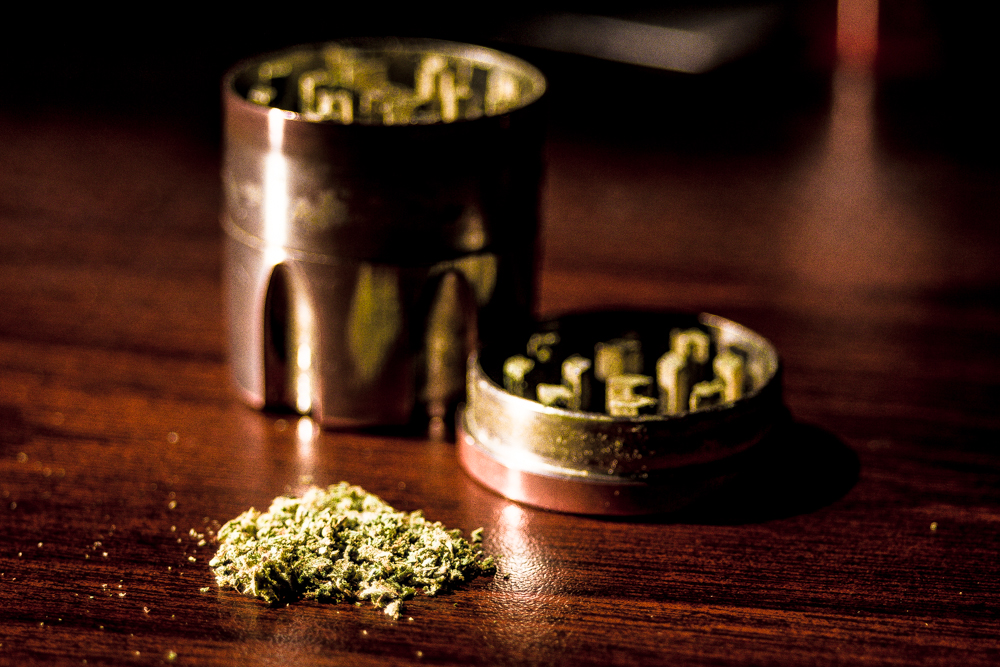 Something you can always find in every marijuana smoker’s pocket is weed grinder.It is necessity for every modern day smoker.There are many types of herb grinders used to crush weed and prepare it for smoking.Weed grinders can be in different sizes, colors and made for different purposes but they all have the same goal, to prepare weed for smoking.Various companies create a grinders from all kind of materials.The best herb grinders you can find on the market are aluminium grinders.Getting weed grinder requiers some research and understanding of brands and materials.
 Most grinders, especially the four piece metal ones collect the pollen crystals also known as kief, that fall off the buds when grinding.All you have to do is put buds into weed grinder and turn the grinder few times. As the buds break, they fall into a part of grinder with a screen and any loose material fall through the screen into place where pollen is collected.