I wouldn’t be a good attorney unless I prefaced this article with a few disclaimers: 1) Marijuana is still a controlled schedule I substance and is illegal in the eyes of the Federal Government of the United States; 2) This article is not to be construed as legal advice, nor is intended to take the place of the advice of an attorney, and you should consult with an attorney before taking any actions in furtherance of the subject matter of this article. Ok, let’s begin.
In the month of November, the State of Arizona passed Proposition 203, which would exempt certain people from controlled substances laws in the State of Arizona. However, it will still take some time before medical marijuana is implemented as policy in Arizona. The Arizona Department of Health Services has released a proposed timeline for the drafting of the rules surrounding the implementation of Proposition 203. So far, these are the important time periods that should be paid close attention to:
December 17, 2010: The first draft of the medical marijuana rules should be released and made available for comment on this date.
January 7, 2011: This will be the deadline for public comment on the first draft of rules mentioned above.
January 31, 2011: The second draft of the rules will be released on this date. Once again, it will be available for informal comment as in the draft referred to above.
February 21 to March 18, 2011: More formal public hearings will be held about the proposed rules at this time, after which the final rules will be submitted to the Secretary of State and made public on the Office of Administrative Rules website.
April 2011: The medical marijuana rules will go into effect and be published in the Arizona Administrative Register.
It is important that at all times throughout the consultation process, interested parties submit briefs and/or make oral presentations when permitted. Groups with interests contrary to those of medical marijuana advocates may also be making presentations, and may convince the State to unnecessarily restrict the substance or those who may qualify to access it if there is no voice to advocate in favor of patients’ rights.
Some key points about Proposition 203’s effects
-Physicians may prescribe medical marijuana for their patients under certain conditions. “Physician” is not defined in a way limited to normal medical doctors. Osteopaths licensed under Title 32, Chapter 17; naturopaths licensed under Title 32, Chapter 14; and homeopaths licensed under Title 32, Chapter 29 may all be eligible to recommend marijuana for their patients.
-In order to be prescribed medical marijuana, a person must be a “qualifying patient.” A qualifying patient is defined as someone who has been diagnosed by a “physician” (as defined above) as having a “debilitating medical condition.”
-Debilitating medical conditions include:
• Cancer, glaucoma, HIV positive status, AIDS, hepatitis C, amyotrophic lateral sclerosis, Crohn’s disease, or agitation of Alzheimer’s disease or the treatment of these conditions.
• A chronic or debilitating disease or medical condition or its treatment that produces one or more of the following: Cachexia or wasting syndrome; severe and chronic pain; severe nausea; seizures, including those characteristic of epilepsy; or severe and persistent muscle spasms, including those characteristic of multiple sclerosis.
• Any other medical condition or its treatment added by the Department of Health Services pursuant to Section 36-2801.01.
This last qualifying condition is underlined because it is vitally important during the rulemaking process. Although Proposition 203 allows for the public to petition the Department of Health Services to exercise its discretion to add conditions under this section, bureaucracy is notoriously difficult to get to change any law. The initial discretionary rules for additional treatments could be exercised during the public consultations that occur between December and March, though this is not certain.
It is therefore important that, in the event that the addition of medical conditions is considered during the consultations, any stakeholder who wishes for a medical condition not listed in the first two bulleted items above to lobby during the public consultation periods for the Department to add the additional medical condition to the list of debilitating medical conditions. In order to increase the prestige of any presentations made to justify adding medical conditions under Section 36-2801.01, it may be helpful to solicit the testimony of sympathetic Arizona-licensed medical doctors who can testify on paper and at the public hearings about why the proposed condition should be added. Documents showing that other jurisdictions, both in the United States and elsewhere, currently use marijuana as a treatment for the proposed condition may be helpful, as would medical journals on the subject.
It should be remembered that despite his cheery YouTube videos about the medical marijuana rule drafting process, Director of Health Services Will Humble wrote a submission in opposition to the passing of Proposition 203. He did so on the grounds that the FDA does not test the drug, and even though the federal government’s anti-marijuana policy is well-known it should not be relied on as an authority for unbiased medical marijuana research. There is no reason to believe that Director Humble will be any less inclined to obstruct the use of medical marijuana during the rulemaking stage, and all proponents of medical marijuana should be sure to make their voices heard at the consultations to prevent the obstruction of the intent of Proposition 203.
Extent of Rulemaking during Consultations
There are other provisions in Proposition 203 which will be discussed during the initial rulemaking process, and they will probably be the main focus of the consultations. The consultations will create rules:
• Governing the manner in which the Department of Health Services will accept the petitions from the public previously mentioned, regarding the addition of medical conditions to the list of the already enshrined debilitating medical conditions.
• Establishing the form and content of registration and renewal applications submitted under the medical marijuana law.
• Governing the manner in which the Department will consider applications for and renewals of medical marijuana ID cards.
• Governing the various aspects around the newly legalized nonprofit medical marijuana dispensaries, including recordkeeping, security, oversight, and other requirements.
• Establishing the fees for patient applications and medical marijuana dispensary applications.
The most crucial part of the consultation period will be regarding the rules governing the establishment and oversight of medical marijuana dispensaries. If interest groups lobby the Department to make the recordkeeping, security, oversight, and other requirements around dispensaries too restrictive, it will have the effect of reducing the availability of medical marijuana to patients and driving up the price of medical marijuana due to the lack of supply. It could simply become too costly to comply with all of the regulations.
During this stage, it is important that stakeholders-particularly medical marijuana dispensaries from out-of-state, and perhaps pharmacists with a bit of economic knowledge-submit briefs explaining why certain proposed rules may have a negative effect on the patients this Proposition is supposed to help. The proposed rules have not come out yet, but when they do, they should be closely scrutinized for the possible negative impact that unnecessarily tough security and recordkeeping on nonprofit dispensaries might have on patients.
The other major factor in the rulemaking will have to do with the fees. The Department will be setting fees for medical marijuana dispensaries during the consultation period. Proposition 203 provides that the fees may not exceed $ 5,000 per initial application, and $ 1,000 per renewal. However, with some lobbying during the public consultation, it is possible that the actual fees will be much less since these are simply the maximum that the Department may charge.
Discrimination against Medical Marijuana Users
Under Proposition 203, discrimination against medical marijuana users will be prohibited in certain circumstances. Based on our analysis, a person may not:
• As a school or landlord, refuse to enroll someone or otherwise penalize them solely for their status as a medical marijuana cardholder, unless not doing so would result in the loss of a monetary or licensing related benefit under federal law or regulations.
• As an employer, discriminate against hiring someone, or terminate them or impose any conditions on them because they are a medical marijuana cardholder, unless not doing so would result in the loss of a monetary or licensing related benefit under federal law or regulations. Employers may still terminate employees if the employee is in possession of or impaired by marijuana on the premises of the place of employment or during the hours of employment.
• As a medical care provider, discriminate against a cardholder, including in matters of organ transplants. Medical marijuana must be treated as any other medication prescribed by a physician.
• Be prevented, as a cardholder, from having visitation custody or visitation or parenting time with a minor, unless the cardholder’s behavior “creates an unreasonable danger to the safety of the minor as established by clear and convincing evidence.”
Although there are certain prohibitions on discrimination, there are also provisions which permit discrimination against medical marijuana cardholders:
• Government medical assistance programs and private health insurers are not required to reimburse a person for their medical marijuana use.
• Nobody who possesses property, including business owners, is required to allow medical marijuana on their premises (this seemingly includes landlords who, although they cannot refuse tenants based on their being a cardholder, are permitted to prevent cardholders from bringing marijuana onto the landlord’s property).
• Employers are not required to allow cardholders to be under the influence of or ingest marijuana while working, though the presence of marijuana in the body which is not of a sufficient concentration to cause impairment does not establish being under the influence of it.
Rules Related to the Establishment of Dispensaries
Although the final rules around security, recordkeeping, and other requirements for medical marijuana dispensaries will not be established until April 2011, there are certain requirements which are enshrined in Proposition 203 itself and can be known ahead of the time that the final rules come out. These minimal requirements may not be as restrictive as the final requirements which are published in April 2011.
• Medical marijuana dispensaries must be nonprofit. They must have bylaws which preserve their nonprofit nature, though they need not be considered tax-exempt by the IRS, nor must they be incorporated.
• The operating documents of the dispensaries must include provisions for the oversight of the dispensary and for accurate recordkeeping.
• The dispensary must have a single secure entrance and must implement appropriate security measures to deter and prevent the theft of marijuana and unauthorized access to areas containing marijuana.
• A dispensary must not acquire, possess, cultivate, manufacture, deliver, transfer, transport, supply, or dispense marijuana for any purpose other than providing it directly to a cardholder or to a registered caregiver for the cardholder.
• All cultivation of marijuana must take place only at a locked, enclosed facility at a physical address provided to the Department of Health Services during the application process, and accessible only by dispensary agents registered with the Department.
• A dispensary can acquire marijuana from a patient of their caregiver, but only if the patient or caregiver receives no compensation for it.
• No consumption of marijuana is permitted on the property of the dispensary.
• A dispensary is subject to reasonable inspection by the Department of Health Services. The Department must first give reasonable notice of the inspection to the dispensary.
Comparison to California’s Medical Marijuana Law
The Arizona law is by no means the same as the law in California. There are certainly some differences between the two, though in some respects they are comparable. This is a comparative analysis of the two laws.
Similarities:
• Both laws, as a practical matter, allow for broad discretion on the part of a physician to prescribe marijuana to patients who suffer from pain. In the Arizona law, “severe and chronic pain” is the legislated standard. In the California law, any “chronic or persistent medical symptom” that substantially limits the life of the patient to conduct one or more major life activities as defined by the Americans with Disabilities Act of 1990, or that if not alleviated, will cause serious harm to the patient’s physical or mental safety, qualifies.
• Both laws have a number of illnesses which are automatically considered qualifying illnesses for the prescription of medical marijuana. These include, but are not limited to, AIDS, cachexia, cancer, glaucoma, persistent muscle spasms, seizures, and severe nausea.
• Both laws require the use of an identification card by those who have been prescribed medical marijuana, after the cardholders have gone through an initial application process in which the use of the drug has been recommended by a physician.
• Both states do not factor in the unusable portion of the marijuana plant in determining the maximum weight of marijuana that is permissible for possession by a cardholder.
Differences:
• Though the rules have not been finalized, the Arizona law appears as though it will be regulated on the state level and therefore uniform across Arizona. The California law, however, is regulated significantly on the municipal level, and therefore the rules around dispensaries can vary greatly from one municipality to the next.
• The Arizona law provides a broader spectrum of people who are considered a “physician” for the purpose of prescribing medical marijuana. In California, only medical doctors and osteopaths are considered to be physicians. In Arizona, in addition to medical doctors and osteopaths, naturopaths and homeopaths will also be permitted to prescribe medical marijuana.
• In California, patients or their caregivers may grow marijuana plants in lieu of using a medical marijuana dispensary. In Arizona, patients may only grow marijuana or designate someone else to do so in lieu of visiting a dispensary on the condition that there is no dispensary operating within 25 miles of the patient’s home.
• The maximum possession limit for marijuana in California is eight ounces per patient, whereas the limit is only 2.5 ounces per patient in Arizona.
-This is not meant to be legal advice and is provided purely as an analysis of the current legislation. You should consult with an attorney to discuss these matters. We are available for consultations for this matter by appointment only and via prepayment of the consultation fee.
Find More Marijuana Articles


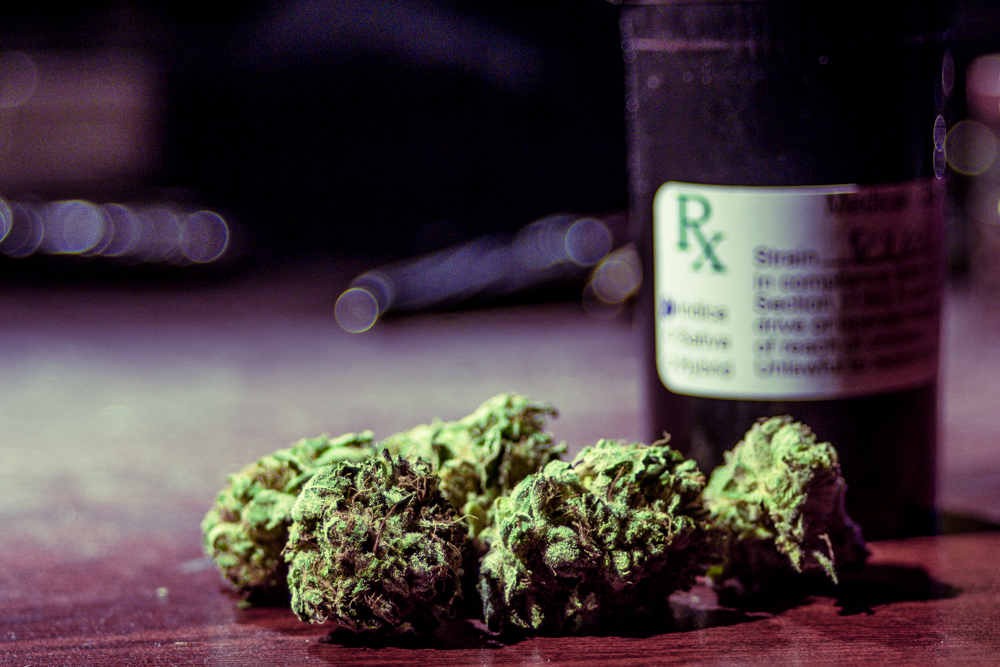 The Royal Purple Kush is one of those strains of marijuana that was bred for taste. It combines the sweetness of the Black Afghani with the peppery accents and fruity taste of the Bubba Kush. But don’t think your missing out on anything to get the better taste. This bud packs quite the punch.
 So the taste is amazing, we covered that. The Royal Purple Kush has a sweet, pepper taste that really has to be enjoyed to be appreciated. The smoke is rich, and full. The exhale is thick and musky.
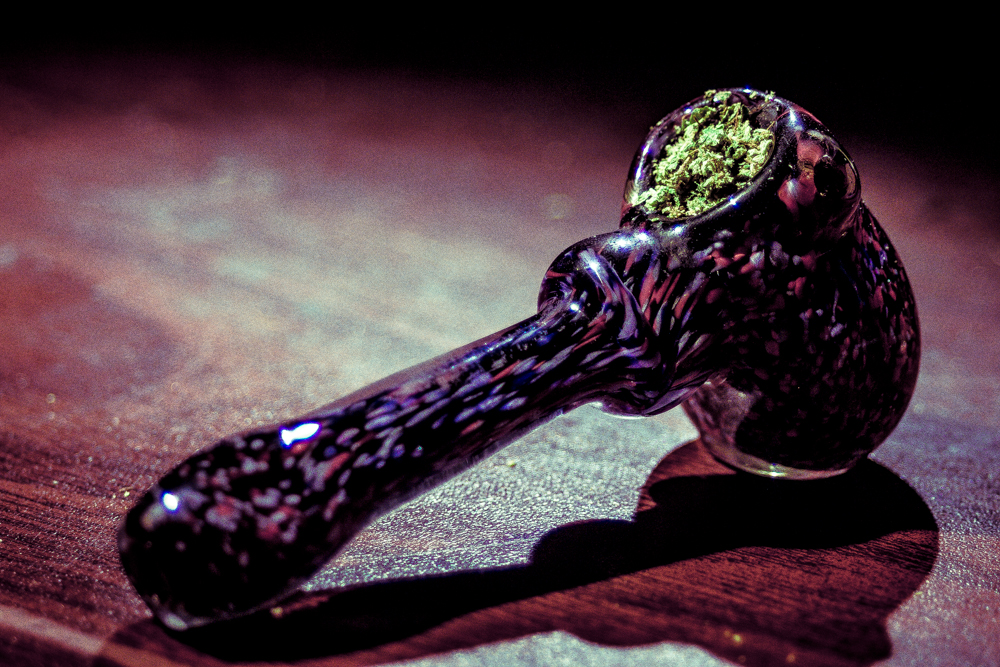 The Royal Purple Kush is a great bud for everything from chores to playing video games. The body buzz will keep you moving, while the head high will focus you in on your goal. All of that in a delightfully flavored package. If your local weed store starts stocking Royal Purple Kush, you should give it a try.